10 Employee Engagement Tips Your Team Will Actually Use

When you walk into the office every morning and see everyone happily going about their tasks, it's easy to be led into thinking, "This is an engaged team!"
It's usually not. It's a team that hasn't quit yet.
Most engagement advice could be printed on a mug. Happy teams are productive teams. Cute. But useless.
Real engagement looks like recognition that lands the day it happens, comms that reach the night shift, feedback that actually changes something, and growth that doesn't require begging for a meeting. It needs to live where your team already works, not in another platform nobody opens.
CentricMinds builds three products that handle the three jobs that matter here.
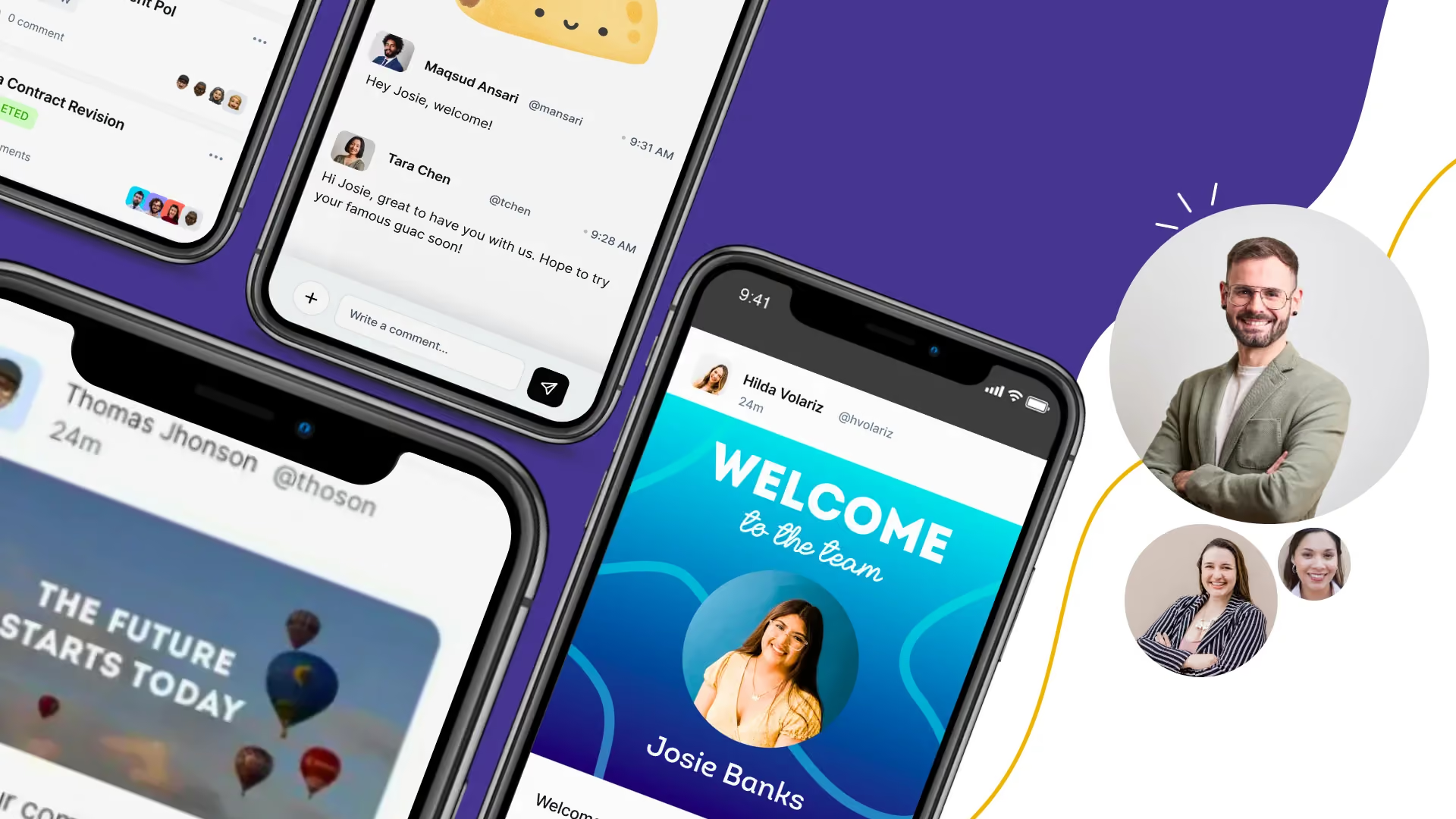
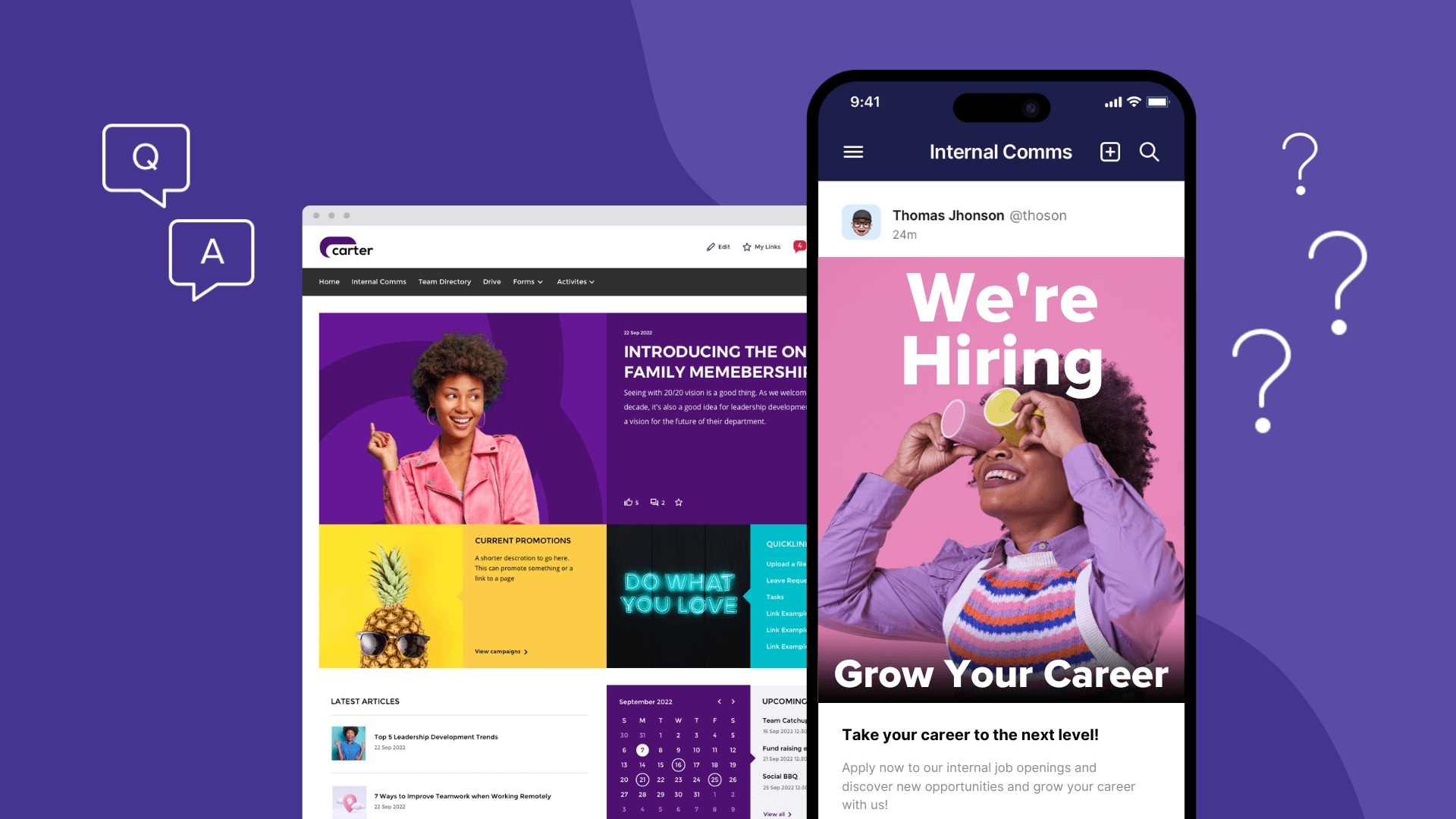
The Work App for team chat, news, Praise, Wellbeing check-ins, and Polls on mobile and desktop.
The Staff Intranet for long-form news, documents, policies, forms, and workflows.
Performance Management for goals, check-ins, reviews, and career development. Used together or on their own, depending on what your team needs.
These strategies show what real engagement looks like in 2026, and which product picks up which job.
1. Make the mission actually mean something
If your mission is not visible and usable, it's forgettable. Most employees hear it once at onboarding and never see it again.
Bring it to life. Post it in the Work App news feed. Use it in Praise: "That is what customer-first looks like." Tie it to real actions. When someone steps up, make it clear why it mattered. Run a quick Poll in the Work App asking "is our mission still real to you?" Then show what you are doing about the answers.
Where this lives: CentricMinds Work Chat (News, Praise, Polls), Team Intranet (long-form mission and strategy pages)
2. Build culture around shared values
Your values should not live in the onboarding deck. They should show up in how people act, and how you acknowledge it.
Do not just write down your values, watch for them. When someone steps in without being asked, deescalates a conflict, or mentors a junior, call it out. Drop a Praise in the Work App with plain language and a real moment. Share it in the news feed so the whole team sees what good looks like.
Where this lives: Work Chat (Praise, Chat, News)
3. Make roles crystal clear
People cannot perform if they are unclear on expectations or how progress is measured.
This is where Performance Management does its job. Mondiale VGL uses CentricMinds Performance Management to run goals, check-ins, and reviews so team members know what they own, what good looks like, and how progress is tracked in real time. Responsibilities and expectations are not buried in a PDF, they are part of the weekly rhythm.
Pair that with task ownership and team chat in the Work Chat, and people always know who is doing what, when, and why.
Where this lives: Performance Management (Goals, Check-ins), Work App (Chat), Company Intranet (Tasks, Onboarding)
4. Gossip is good, for culture
Gossip has a bad reputation. But informal chatter, the jokes, the inside references, the story someone tells about how a teammate saved the day, is where culture spreads. If your team has nowhere to share that kind of stuff, culture dies quietly.
Spin up channels in the Work Chat by crew, shift, location, or interest. Encourage teams to share quick video shout-outs and peer praise. Let recognition feel informal, human, and unscripted. The more your culture lives in the day-to-day back and forth, the more it sticks.
Where this lives: Work Chat (Chat channels, Praise, News)
5. Fix the flow of communication
Engagement withers away when updates are missed, conversations get buried, or feedback never gets acknowledged.
Create structured channels in the Work Chat by function, team, or topic. Use push notifications for urgent updates, but not for everything. Make it easy for feedback to flow up, not just down. Do not bury critical updates under birthday shout-outs. Teams do not need more noise, they need relevant, readable comms they can act on.
For long-form policy updates, change management comms, or anything that needs a permanent home, that belongs in the Staff Intranet.
Where this lives: Work Chat (Chat, News, Push), Company Intranet (long-form news, policy comms)
6. Do not let managers wing it
Frontline managers shape the employee experience more than any policy or platform. Most get promoted with zero leadership support.
In the Staff Intranet, build a manager hub with bite-sized leadership resources, short video walkthroughs, and the templates managers need to run good check-ins. In Performance Management, give managers structured check-in cycles so they have a rhythm to follow instead of figuring it out alone. Use Wellbeing check-ins in the Work App to track how teams feel about their managers, flagging who needs support before things break.
Where this lives: Company Intranet (manager hub, resources), Performance Management (check-in cycles), Work Chat (Wellbeing check-ins)
7. Track the emotional pulse, and act on it
It is not enough to be seen. People need to feel safe saying, "I'm not okay."
Engagement is not just about output. It is about how people feel showing up to work, and whether they feel seen, safe, and supported.
Use anonymous Wellbeing check-ins in the Work Chat to track how your team is feeling over time. Give people the option to reach out to a trusted team member or manager when something is not right. Spot patterns before burnout hits. Highlight where teams are thriving, and where leaders might need help.
Where this lives: Work Chat (Wellbeing check-ins, Chat)
8. Do not miss the ones who fly under the radar
Some of your best people never shout. They do not interrupt meetings or chase praise. But they are steady, reliable, and easy to overlook until it is too late.
Build recognition into the everyday with Praise in the Work App. Encourage peer-to-peer recognition so quieter team members get acknowledged without needing to raise their hand. Then use Performance Management to make sure that recognition translates into real career conversations and growth opportunities, not just a nice moment that disappears.
Where this lives: Work Chat (Praise), Performance Management (career development, reviews)
9. Share what you learn, not just what you ask
Wellbeing efforts fall flat when teams keep being asked "how are you feeling?" but never see anything change.
Use Polls and Wellbeing check-ins in the Work App to ask how people are doing. Just as importantly, share the themes that emerge back to the team. If people flag overload, show what you are doing about it. When managers get great feedback, let them know why it matters. Transparency builds trust. Change builds credibility.
Where this lives: Work App (Polls, Wellbeing, News), Staff Intranet (longer follow-up posts on what changed)
10. Let people grow, or watch them go
Top performers will not beg for growth, they will just leave. The most engaged people are not just looking for praise, they are looking for progress.
As Vanessa Van Edwards explains in Captivate, people feel most seen when their unique traits, not just their output, are called out in the moment. Spot growth traits in real time. Call them out.
"You have a real eye for simplifying the complex.""Your feedback always sharpens the work.""You stay calm when things go sideways, and people follow your lead."
That is what Praise in the Work App is for. The deeper work happens in Performance Management, where you can set growth goals, run regular check-ins, and turn "you are great at this" into a real development path with a manager who is paying attention.
Where this lives: Work App (Praise), Performance Management (Goals, Check-ins, Career Development)
11. Help AI support your people, not replace them
As AI tools become part of everyday workflows, it is easy for people to feel sidelined. Used well, AI should elevate human strengths, not erase them.
Use AI to automate the admin and free up time. Then make sure the outcomes get tied back to people. Recognise the team that turned AI insights into action. Let employees share feedback on AI interactions. Build a loop where humans guide, improve, and lead, not just respond.
Where this lives: Across all three products, applied to the boring parts so people get more time for the work that matters.
What your employees actually want in 2026
People do not want to be managed, they want to be trusted. They need tools that help them do great work and feel seen doing it.
Especially now, with AI automating the easy stuff, employees are asking a tougher question:What does the company actually need me for?
They lean in when:
- Recognition is real, specific, and timely
- Purpose shows up in actions, not slogans
- Communication flows both ways
- Their manager makes them feel capable, not watched
- Their emotional state is noticed, not ignored
- AI helps them move faster, not feel irrelevant
They tune out when:
- Recognition is generic
- Feedback loops go nowhere
- Wellbeing check-ins do not lead to change
- Communication is one-way
- The tools feel like surveillance, not support
If your workplace reflects what people believe in 2026, they will bring their best. If not, they will bring just enough to stay employed.
Why most engagement tools fail
Most platforms are built to broadcast, not engage. They send updates, not feedback. They measure clicks, not trust.
CentricMinds takes a different approach. Three products, each doing its job properly. The Work App for the daily back and forth where culture actually lives. The Staff Intranet for the long-form policies, news, and documents that hold the organisation together. Performance Management for the goals, check-ins, and growth conversations that turn engagement into careers.
Buy what you need. Add the others when you are ready.
What this looks like in practice
Aged care team engagement
A 120-person aged care provider could replace a paper-heavy intranet with a modern Intranet for policies and shift information, the Work App for daily Praise and Wellbeing check-ins (especially for night shift staff), and Performance Management to run quarterly check-ins with carers who are usually invisible to head office.
Daily Praise makes recognition visible. Wellbeing check-ins surface stress before it turns into burnout. Quiet achievers finally get recognised in their reviews. Read the Regis Healthcare case study →
Retail chain comms overhaul
A retail chain rolling out CentricMinds across stores nationally uses the Work App for store-level chat channels and push notifications, Modern Intranet for product launch information and policy updates, and Performance Management for store manager goals and reviews.
Push notifications mean updates get seen, not buried in email. Team chat sparks fast feedback that leads to customer improvements. Performance check-ins keep store managers focused on what matters.
Real-world: Kmart Australia and New Zealand
Kmart uses CentricMinds to manage task execution across store teams through their branded intranet, KiT. It is a strong example of how structured comms and task management support engagement at scale.
Read the Kmart case study →
What you can do with CentricMinds
- Centralise team communication across head office and the frontline
- Recognise great work in the moment, not at the end of the quarter
- Streamline onboarding, tasks, and policy management
- Run structured performance and development cycles
- Reach everyone, from head office to the floor, on whatever device they have
Used by teams in healthcare, retail, logistics, government, and manufacturing across Australia, New Zealand, and the US.
Ready to engage your team for real?
Forget the one-off gestures. Give your people tools they will actually use every day.
Start with the Work Chat on a 7-day free trial. No credit card required.
If you want to see the Staff Intranet or Performance Management in action, book a demo and we will walk you through what fits your team.