9 Steps to Build an Internal Communication Strategy That Works

The impact of business growth on internal communication
In the early stages of a business, communication feels simple. Everyone talks, information moves quickly, and people are generally across what’s happening.
As businesses grow, communication becomes harder. Teams expand, managers sit between employees and leadership, and information becomes more difficult to find. Important updates get missed, employees feel less connected, and work starts happening across too many systems.
What once felt easy can quickly become fragmented.
A strong internal communication strategy helps employees stay informed, aligned, and connected. It gives people one place to access company updates, documents, policies, and the information they need to do their job.
Whether employees work at a desk, remotely, or on the frontline, the goal is the same: clear communication that helps people stay connected and get work done.
If your business does not yet have a clear internal communication strategy, these nine steps will help you build one.
Let’s get into it.
Build your case for an internal communication strategy
1. What's your vision
Start by defining a vision for your internal communication and connect it to your organisation’s purpose, values, and culture. What that looks like will be different for every business, but the goal is the same: make it relevant to the way your teams actually work.
As your organisation grows, communication becomes harder. A clear vision helps ensure employees stay informed, connected, and aligned with what matters most.
Some questions to help shape your thinking:
- What do you want your workplace communication experience to look and feel like in the future?
- How should employees stay informed as the business grows?
- Which teams, departments, or business units should be involved in the communication strategy?
- What three words best describe the communication experience you want to create? (for example: transparent, informative, two way communication)
- How will stronger communication support company culture, employee experience, and business goals?
The clearer the vision, the easier it becomes to shape communication channels, messaging, and the tools employees will use to stay connected.
2. Collect data
Next, you’ll want to understand how employees currently experience communication across the business.
Do employees feel informed about company updates, new initiatives, and organisational change? Are teams given the right tools to communicate effectively? Can employees easily find the information they need to do their job?
The best way to understand what is working and where communication is breaking down is to gather feedback directly from employees.
You can do this by running an employee survey or holding a short workshop with key stakeholders from across the organisation.
Some useful metrics to consider include:
- Employee engagement survey results
- Internal communication survey results
- Employee retention rate
- Recall of internal messages
- eNPS (Employee Net Promoter Score)
This data helps identify communication gaps between how the business believes communication is working and how employees actually experience it.
With better insight, it becomes easier to identify priorities and build a stronger case for change.
3. Identify key issues
Now that you have feedback and survey results, patterns should start to emerge.
You’ll likely uncover communication challenges that are affecting employee experience, engagement, or the flow of information across the business.
The next step is to prioritise the issues.
Start by assessing the maturity of each problem:
- Is it a new issue?
- Is it becoming more noticeable?
- Or is it already well established across the business?
Then assess the severity of the impact:
- Low impact
- Medium impact
- High impact
Ask yourself:
- Who is affected?
- Is it impacting employees, customers, or business outcomes?
- How is it affecting communication, trust, or the employee experience?
- What data supports the issue?
Where possible, use survey results and feedback to support your findings. Data helps remove assumptions and creates a clearer picture of where communication is breaking down.
With this information, you can confidently present findings to leadership, align on the key challenges, and begin discussing potential solutions.
Once there is agreement on the diagnosis, the next step is setting clear communication objectives.
4. Set communication objectives
Now that you have data, priorities, and leadership support, the next step is to define what your communication strategy is trying to achieve.
Be clear about the goal and the problem you are trying to solve.
For example, are you trying to:
- Improve awareness and understanding?
- Change employee behaviours?
- Shape attitudes or perceptions?
- Encourage action?
- Help employees work more effectively and stay productive?
Your objectives should be clear and measurable. A simple way to structure them is using the S.M.A.R.T. framework, making goals specific, measurable, achievable, relevant, and time bound.
Here is an example of a communication objective using the S.M.A.R.T. method:
“Our internal communication strategy will target Customer Service and Support teams to improve attitudes towards first contact customer resolution. We aim to reduce customer complaints by 20% and improve team performance within 6 to 12 months.”
Clear objectives make it easier to measure progress, demonstrate impact, and understand whether communication is driving the outcomes you intended.
5. Measure performance
Once your strategy is in place, the next step is measuring whether it is actually working.
Clicks, views, and downloads can provide useful signals, but they only tell part of the story. The bigger question is:
Is communication leading to better outcomes?
Start by asking:
What is this communication trying to achieve?
Then match your metrics to the outcome you want to see.
For example, you might measure whether employees:
- Received, recognised, and can recall key messages
- Engaged with content through comments, reactions, surveys, or discussions
- Changed behaviours as a result of communication
- Shifted attitudes or perceptions over time
- Improved performance outcomes such as efficiency, quality, safety, or productivity
For example, in healthcare, communication may be used to improve workplace safety practices. If the goal is to encourage teams to wear protective eyewear when working with bloodborne pathogens, success could be measured by whether behaviour changes and workplace incidents reduce over time.
You can also measure changes in employee sentiment or internal brand perception before and after major communication initiatives.
The most effective communication strategies are not just seen, they lead to action, behaviour change, and better business outcomes.
6. Distinguish your target audiences
Not every message needs to go to every employee.
Think about who you are trying to reach and what action you want them to take. Depending on your communication goal, your audience might include the entire organisation or a specific team, department, role, or location.
The more relevant the message feels to the audience, the more likely people are to pay attention and act on it.
You can segment audiences using categories such as:
- Role
- Team
- Department
- Location
- Expertise
- Experience level
For example, frontline employees may need mobile updates and quick access to information, while leadership teams may require more detailed communication around business performance or organisational change.
Understanding your audience helps create communication that feels more relevant, timely, and useful.
7. Detect message categories
Your internal communication messaging should align with your company culture and the experience you want employees to have.
Think about the tone of your communication. Should it feel formal, informal, or a mix of both? The right tone often depends on your audience, the message, and the situation.
When creating communication, keep the following in mind:
- Keep messages short and easy to digest. Some of the best messages can be read or understood in 30 seconds or less.
- Use a mix of formats such as written updates, images, video, audio, or verbal communication depending on the message.
- Explain the why behind the message and how it benefits employees or the business.
- Use simple, easy to understand language and avoid unnecessary jargon.
- Write in an active voice where possible. Clear, direct communication is easier to understand and more engaging.
The most effective communication is clear, relevant, and easy for employees to act on.
8. Establish the Team Communication Channels
Channels are the tools used to deliver communication, share information, and help employees stay connected.
The right mix of channels depends on how your organisation works, what you are trying to achieve, and how employees prefer to communicate.
While email and meetings still play a role, modern organisations increasingly rely on digital tools that make communication easier to access, more consistent, and easier to measure.
For many organisations, communication channels can include:
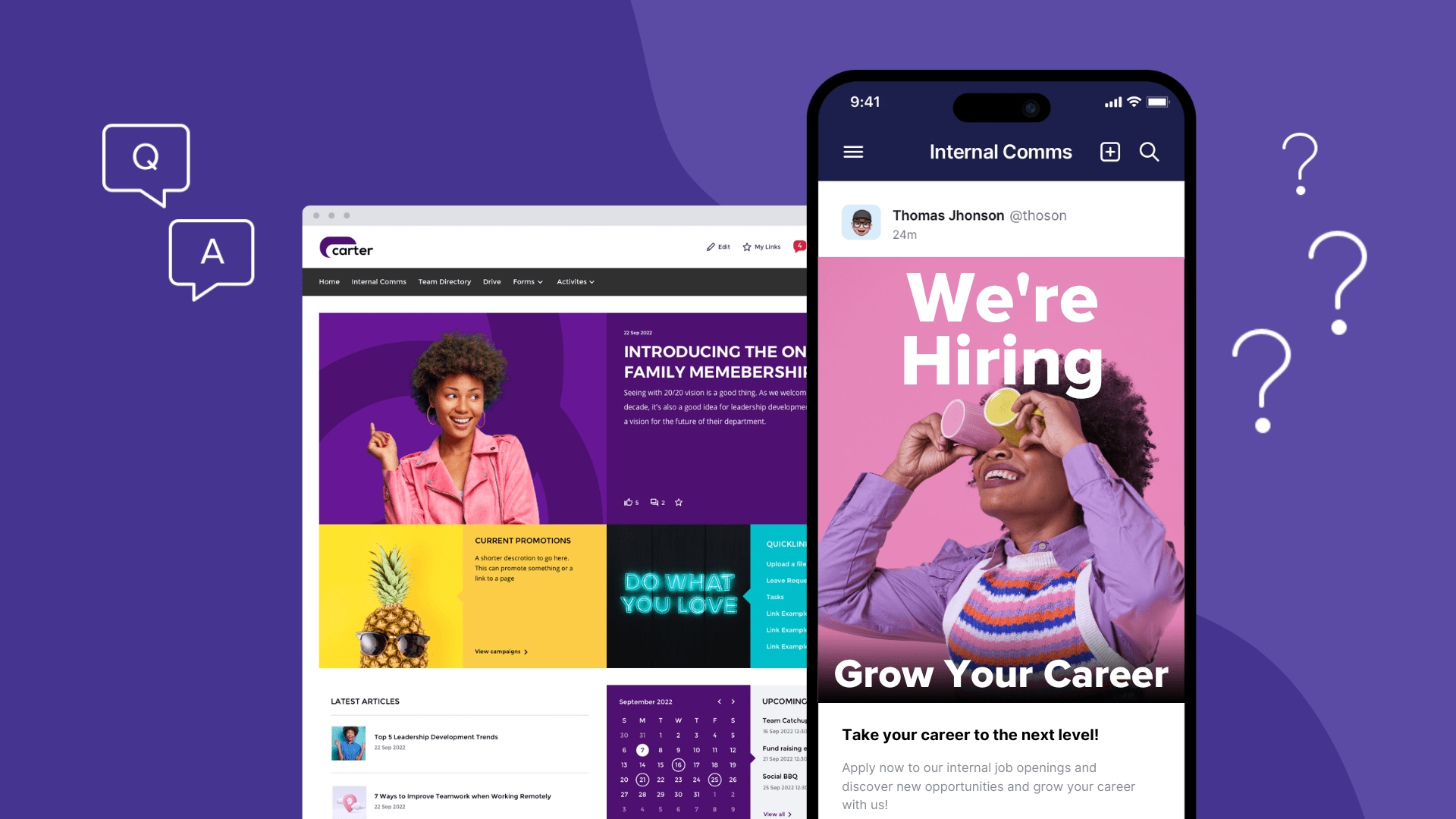
Staff Intranet
A modern intranet helps employees stay informed and access trusted company information.
Examples include:
- Company news and announcements
- Organisational change communication
- Documents, policies, and procedures
- Forms and workflows
- Company knowledge and resources
- Tasks and operational updates
Work App
A dedicated communication platform helps teams stay connected, communicate, and stay informed throughout the day, especially for remote and frontline employees.
Work App channels can include:
- Team messaging and updates
- Recognition and praise
- Polls and employee feedback
- File sharing and collaboration
- Mobile notifications and announcements
- Department, location, or project channels
- Team discussions
Performance Management
Communication also plays an important role in employee performance and development.
Examples include:
- Goals and performance conversations
- Recognition and feedback
- Manager check ins
- Growth and development discussions
- Performance reviews
The most effective communication strategies use the right mix of channels to help employees stay informed, connected, and supported in their work.
9. Amplify your message
Once you’ve chosen the right channels, think about the type of content you’ll use and how often communication should happen.
Will communication include videos, company news, announcements, documents, banners, polls, or team updates?
Frequency matters too.
Many managers underestimate how often employees want communication. Regular updates, visible leadership communication, recognition, and feedback help employees stay informed and connected to what is happening across the business.
When planning communication, think about how messages can be reused and reinforced across different channels.
For example, communication can take many forms including:
- Company news and announcements
- Product releases and project updates
- Team or department updates
- Employee recognition and celebrations
- Video updates from leaders
- Surveys and employee feedback
- Articles, guides, and company knowledge
- Forms, workflows, and notifications
- Training videos and onboarding content
- Safety updates for frontline teams
- Mobile notifications and work alerts
- Team discussions and conversations
The goal is not simply to communicate more. It is to make communication easier to access, more consistent, and more useful to employees.
Turning communication into action
A communication strategy is only effective if employees actually use it.
People need simple ways to stay informed, find trusted information, communicate with teams, and understand what matters.
That is why many organisations support internal communication through a mix of Staff Intranet, Work App, and Performance Management tools.
A Modern Intranet helps employees access company updates, policies, documents, forms, workflows, and company knowledge.
A Work Chat helps teams stay connected through messaging, recognition, polls, channels, file sharing, and mobile communication.
Performance Management helps managers and employees stay aligned through goals, feedback, recognition, check ins, and growth conversations.
Whether employees are desk based, remote, or frontline, the goal stays the same: Help employees stay informed, communicate better, and do great work.