How does a Collaborative Approach Help Build Stronger Teams?

How a Collaborative Approach Builds Stronger Teams
Strong teams don't happen by accident. They get built, and the fastest way to build one is collaboration. When people share ideas freely, back each other up, and trust the person next to them, the whole team gets sharper. Here's how a collaborative approach makes that happen, and how to set your teams up for it.
Communication and collaboration go hand in hand
Before any team collaborates well, communication has to be smooth and easy. Get that right first. If your internal communication could use a tune-up, whether inside a single team or across the whole organization, our guide to Best Practice for Internal Communication is a good place to start.
What the future of work tells us
PwC's report, Workforce of the future: The competing forces shaping 2030, mapped four "worlds" shaping how we work. With 2030 now just a few years out, the picture feels less like a forecast and more like the road we're already on:
- The Red World, where digitization and innovation lead
- The Blue World, where large corporations keep growing
- The Green World, shaped by social conscience
- The Yellow World, where people come first and community rules
It's that last world that points to stronger teams: the human side of work, lifted by technology that helps us collaborate better.
How better collaboration breeds stronger teams
Plenty of work gets done solo, and that's fine. But the bigger wins usually come from people working together. Good collaboration builds a tight network where colleagues help one another, lift each other up, and, most importantly, trust each other.
Google's research into what makes teams succeed, from its Project Aristotle study, pointed to five keys:
- Psychological safety
- Dependability
- Structure and clarity
- Meaning
- Impact
The first three are close to impossible without a collaborative approach.
How businesses help teams collaborate better
Collaboration starts at the top
Collaborative leaders create collaborative teams. That means the C-suite and managers stepping out of the corner office and onto the ground: inviting co-creation, asking employees for help, sharing the load. Lorna Davis' TED Talk, A Guide to Collaborative Leadership, makes the case for radical interdependence, and it's still essential viewing for anyone leading a team.
Your teams will be one of a kind
No two organizations work the same way, even direct competitors of the same size in the same market. Your workplace has its own culture and its own set of values, spoken or unspoken. Let that culture shape how your teams are organized, managed, and supported, so collaboration comes naturally.
Make roles and responsibilities clear
People know their job titles. What's less obvious is their role within the team, and it's not all about tasks. Think responsibilities like speaking up when a decision feels off, suggesting better ways of working, or showing empathy when a colleague is struggling and digging into why rather than writing them off.
Think mini-community, not just team
You probably already have teams: sales, the retail floor, admin. But are they thrown together and left to sink or swim? Treating teams as mini-communities gets far better results. Hire for team fit. Keep members on equal footing, even with a manager in the room. Set up mentors, formal or informal. Rotate working pairs often. And deal with friction early, before it boils over. Personalities either click or learn to work in harmony.
No team is an island
Collaboration inside a team builds strength. Collaboration between teams gives the whole organization a lift. Working groups and social groups that cross team lines spread knowledge and build camaraderie. Run a quiz day, put on a play, start an innovation lab for fresh ideas. The possibilities are wide open.
Use the right technology
A whiteboard brainstorm in the meeting room still has its place. But it isn't always practical, and with hybrid and distributed teams now the norm, it rarely reaches everyone. Going back to that Red World, where digitization and innovation lead, the smart move is to bring the right technology into how your teams work together.
Bring teams together with CentricMinds
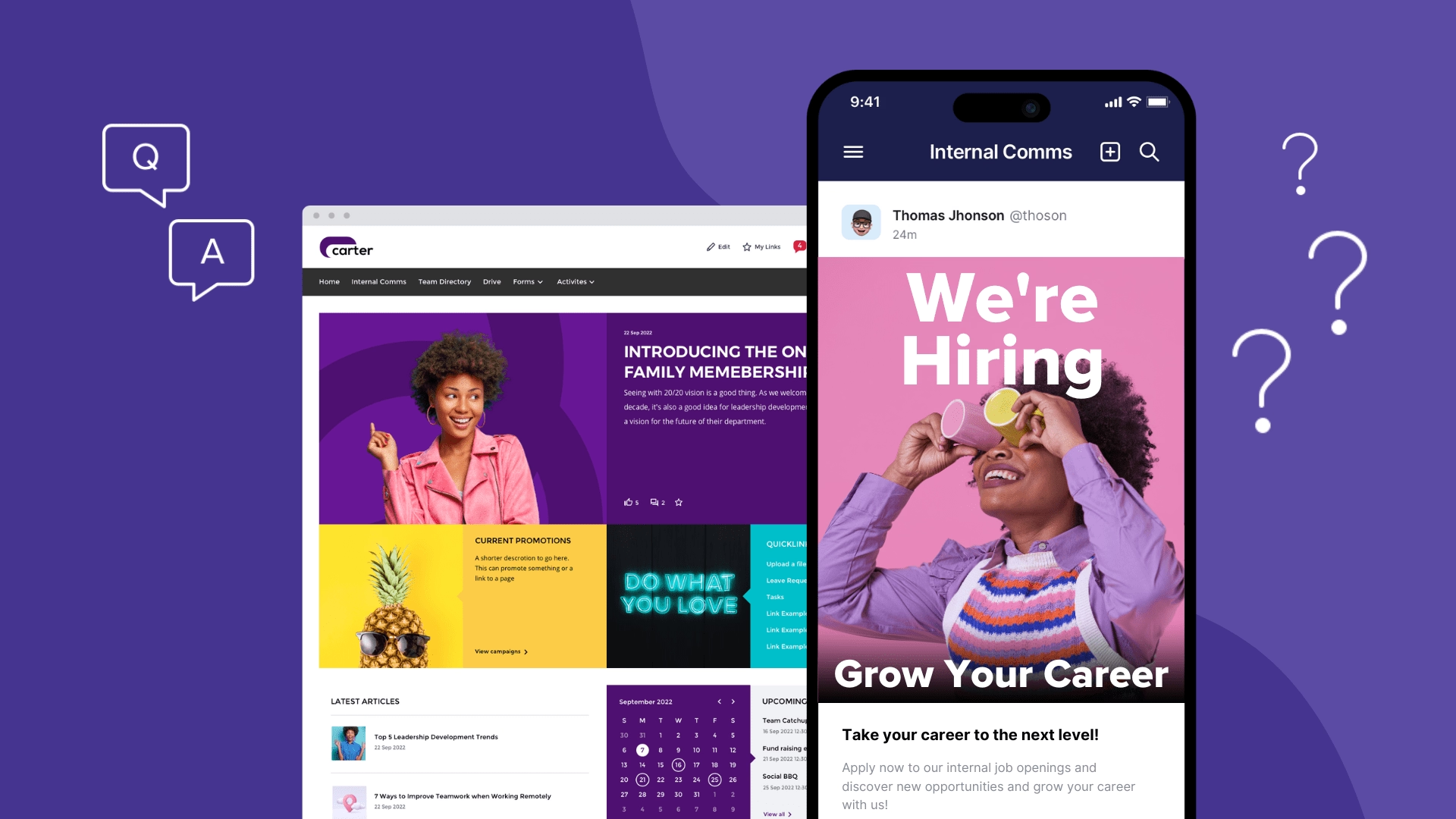
Plenty of companies lean on tools like Slack or Trello. CentricMinds goes further, giving teams what they need to communicate and collaborate without juggling a dozen disconnected apps. Work Chat keeps everyday conversation flowing through team channels and direct messages. A modern intranet shares news and knowledge across the organization and opens it up for comments. And fast document management handles version control, tagging, and mentions, so the right files are always within reach.
Strong foundations, clear processes, and a healthy culture come first. But to capture what's working and keep teams moving, the right software makes all the difference.