The Future of the Mobile Workforce: Trends Shaping Work in 2026
Mobile workforce trends for 2026
Most of your team doesn't sit at a desk. They're on the shop floor, in a ward, on a site, in a vehicle, or moving between locations. For years, workplace tech was built for the people in the office, and everyone else got an email they couldn't read on a phone.
That gap is closing fast. The mobile workforce is no longer a niche or a future trend. It's the default. Here's what's actually shaping how teams work on mobile in 2026, and what mid-sized operational businesses are doing about it.
Frontline teams expect the same tools as head office
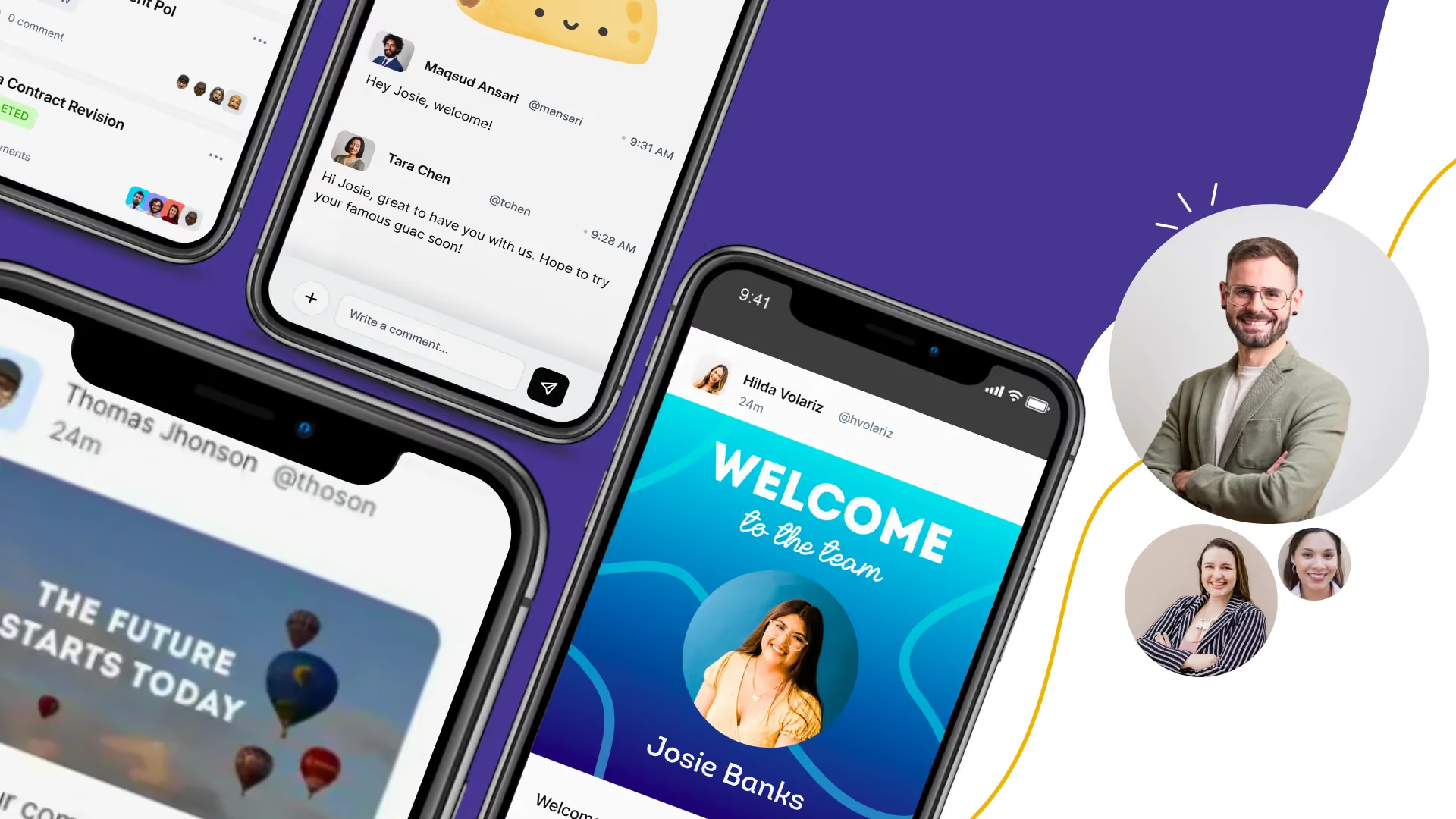
Retail associates, nurses, drivers, technicians, and field crews have stopped accepting clunky printouts and group SMS chains. They want a real app on their phone, with the same chat, news, and notifications the office gets.
The shift is practical. When a store manager can push a price change to every associate in seconds, or when a clinical lead can confirm a shift swap without three phone calls, the work just moves faster. Mobile parity is the baseline now, not a perk.
Chat replaces email as the default channel
Email was built for documents and formalities of the 1990's. It's a poor fit for the way frontline teams actually communicate, which is short, fast, and visual.
Teams are moving to dedicated work chat for day-to-day operations: channels for each store, ward, depot, or project; direct messages for quick questions; voice notes and photos when typing is impractical. Email still has a role for formal records and outside partners, but the centre of gravity has moved.
If you're rolling this out, look for chat that works for external users too. Contractors, suppliers, and partners often need to be in the same channel as your staff, and switching apps to talk to them defeats the point. The CentricMinds Work App handles internal and external users in the same channels.
Recognition and wellbeing move onto the phone
Two things changed in the last few years. Managers learned that recognition delivered weeks after the fact lands flat. And HR teams learned that asking people how they're going once a year in a survey doesn't tell you much.
Both are now mobile-first. A quick Praise message after a shift hits differently to a quarterly award. A two-tap wellbeing check-in pulse gives leaders a read on the team without dragging anyone into a meeting. The mobile context matters: people respond when it's easy and quick, and they don't when it isn't.
News and announcements get push, not pull
Asking deskless workers to log into an intranet to find out what's happening doesn't work. Most of them won't, and the ones who do, won't do it daily.
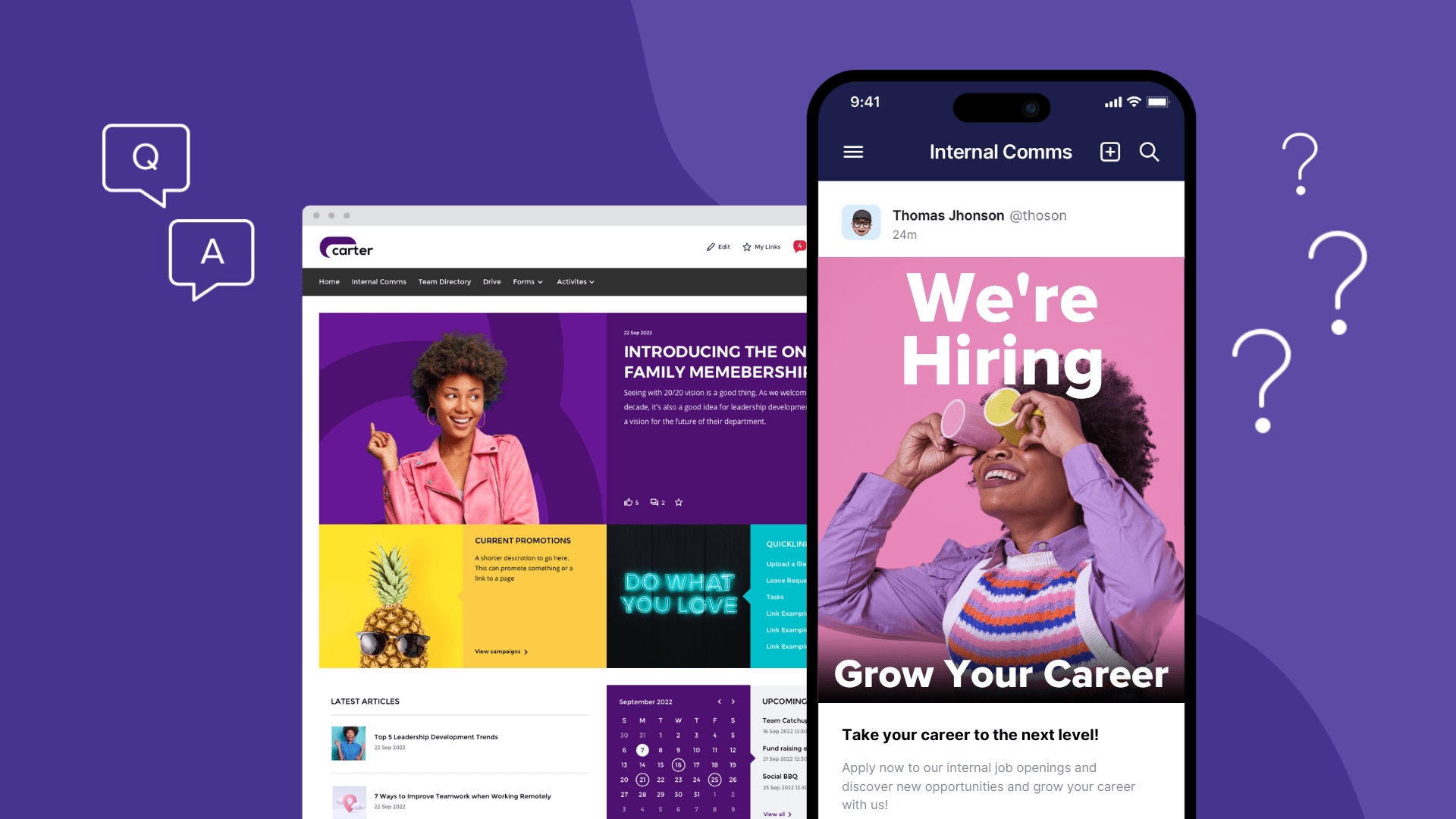
The pattern that works is the opposite. Important news gets pushed to the phone as a notification, with a short read in-app. The long-form version, the policy doc, the full briefing, the change management material, sits on your intranet for anyone who needs the detail. Short on the phone, deep on the intranet, both linked.
Polls and feedback close the loop
One-way comms is dying. If you're broadcasting messages and getting nothing back, you don't actually know if anyone read them, agreed, or is going to act.
Quick mobile polls are filling that gap. Did the new process land? Which roster pattern do people prefer? Is the new uniform working in summer? Two taps, results in an hour, decision by end of day. It's a small feature with an outsized impact on how connected people feel to decisions.
Security and compliance stop being optional
The casual "let's just use WhatsApp for the team" era is ending. Healthcare teams have HIPAA and equivalent obligations. Retail has PCI and customer data. Government has its own requirements. Manufacturing has IP and safety protocols.
A mobile work app needs to be auditable, controllable, and properly hosted. That means SSO, role-based access, the ability to remove a leaver's access instantly, and audit logs for sensitive channels. If your current setup is a group chat in a consumer app, you have a compliance problem you haven't been audited on yet.
What this means for your team
If you're planning mobile rollout in 2026, three things matter more than the rest.
Pick one app, not five. Frontline workers won't juggle a chat tool, a news app, an HR app, a recognition app, and a wellbeing app. They'll pick one and ignore the rest.
Get the basics right before the extras. Reliable chat, push notifications that actually arrive, and a fast app that doesn't drain the battery. Fancy features don't matter if the core is broken.
Plan for external users. Suppliers, contractors, and partners are part of your operation. If your mobile tool can't include them, you'll end up running parallel channels anyway.
Try the CentricMinds Work App free for 7 days. No credit card required. Chat, news, Praise, wellbeing check-ins, and polls in one app for your team and external collaborators.