Team Collaboration Trends for 2026

Team Collaboration Trends for 2026
Team collaboration looks very different than it did five years ago. The shift to hybrid work is no longer a trend, it's the baseline. What's changing now is how teams actually get work done day to day, the tools they reach for, and what they expect from the software in between.
We work with companies across healthcare, retail, government, and manufacturing, and we see the same patterns showing up. Here are the trends shaping team collaboration software in 2026, and what they mean for the way your people work.
Chat is the new inbox
Email still exists, but it is not where work happens anymore. For most teams, chat is now the primary channel for everything from a quick question to a project decision. Email has quietly become the place you send invoices, contracts, and external comms.
The shift matters because chat is faster, more visible, and easier to search. A new starter can scroll a channel and pick up context that used to live in someone's inbox. The trade-off is noise, and the teams that get this right are the ones that treat channels with the same care as a filing system. Clear naming, clear purpose, and the discipline to keep work in the right place.
If your team is still living in email, this is the year to make the switch. The productivity gap between chat-first teams and email-first teams is now wide enough to feel.
The rise of the personal work stack
For years, IT chose the tools and everyone fell in line. That model is breaking down. Knowledge workers now bring their own preferences into the workplace, and they expect their tools to play nicely with whatever the team has standardised on.
Designers want their design tools. Developers want their code tools. Marketers want their content tools. The shared layer underneath, the place where the team actually talks, plans, and decides, has to be the connective tissue that holds it all together.
For software vendors, the implication is clear. The era of the locked-in suite is over. Buyers want products that do one thing well, work with what they already have, and do not force the rest of the company into the same ecosystem. This is part of why we sell our Work App, Staff Intranet, and Performance Management as separate products. Buy what you need.
AI assistants, used carefully
AI is in every product pitch right now, and most of it is noise. The useful applications in team collaboration are narrower than the marketing suggests, and they are mostly about saving time on the boring stuff. Summarising long threads. Drafting first versions of comms. Pulling key points out of a meeting transcript. Finding the document someone shared three months ago.
What the best teams are doing is treating AI as a junior assistant, not a decision maker. It speeds up the first 80 percent of a task so a human can spend their time on the last 20 percent that actually matters. The teams that hand over judgement to AI tend to regret it.
The practical question for 2026 is not whether to use AI in your collaboration tools. It is which tasks you trust it with, and where you keep humans firmly in the loop.
Async is finally taken seriously
For a long time, async work was something remote-first companies talked about and everyone else ignored. That is changing. Teams spread across time zones, four-day-week experiments, and the simple fact that nobody wants another meeting have all pushed async to the front.
What async actually means in practice is writing things down. Replacing the status update meeting with a written post. Recording a quick video walkthrough instead of booking a call. Keeping decisions in a channel where the person who joins on Monday can catch up without asking anyone.
This is a culture change as much as a tool change. The tools have been ready for years. The shift in 2026 is that more leadership teams are willing to actually use them.
Wellbeing built into the day
The novelty of wellbeing programs has worn off, and what is left is the stuff that actually works. Regular check-ins. Lightweight pulse surveys. Recognition that happens in the flow of work, not in a quarterly ceremony nobody remembers.
What we hear from customers is that wellbeing only sticks when it lives inside the tools people already use. A separate app that nobody opens does not move the needle. A short check-in inside the chat app people open thirty times a day does.
The trend is towards smaller, more frequent signals. A quick poll on how the team is feeling this week. A way to recognise a teammate the moment they have done something good. Anonymous wellbeing check-ins that flag issues before they become resignations. This is where our Work App focuses, because this is where the day actually happens.
External collaboration without the security headache
The line between internal and external teams keeps blurring. Suppliers, contractors, agencies, and partners are now part of the day-to-day for most operational businesses. The old answer was to email PDFs back and forth or set up a separate portal nobody logged into.
The new answer is to let external users into the same channels as your internal team, with the right permissions and a clear audit trail. The collaboration tools that win in 2026 are the ones that handle this properly, so a contractor can join a project channel for six weeks and leave without anyone worrying about who still has access to what.
If your current setup has people emailing zip files to external collaborators, it is costing you more than you think.
Mobile-first for everyone, not just the office crowd
Desk workers got mobile collaboration tools years ago. Frontline workers, the people in stores, on wards, on factory floors, on trucks, mostly did not. That is the gap that closed in 2024 and 2025, and the expectation has now caught up.
If your nurses, retail staff, drivers, or technicians cannot access company news, raise an issue, or check a roster from their phone, they are working in a different company than your head office. The trend in 2026 is treating frontline and desk-based teams as equals on the same platform, with the same access to news, recognition, and the people they need to talk to.
This is the single biggest change in how we think about internal communication software, and it is the reason mid-sized businesses are moving away from intranets that only work on a laptop.
What this means for your team
The trends above are not new tools. They are new expectations. The teams that adapt to chat-first work, personal stacks, careful AI, async habits, embedded wellbeing, external collaboration, and mobile-first access are the ones that will feel calm and productive in 2026. The teams that hold on to the old model will spend the year frustrated.
If you are reviewing your team collaboration software this year, start with the questions your people are already asking. Where do conversations actually happen. What gets repeated in five different places. Which work happens on a phone. Where the silence is, and what that silence is costing you.
See how CentricMinds fits
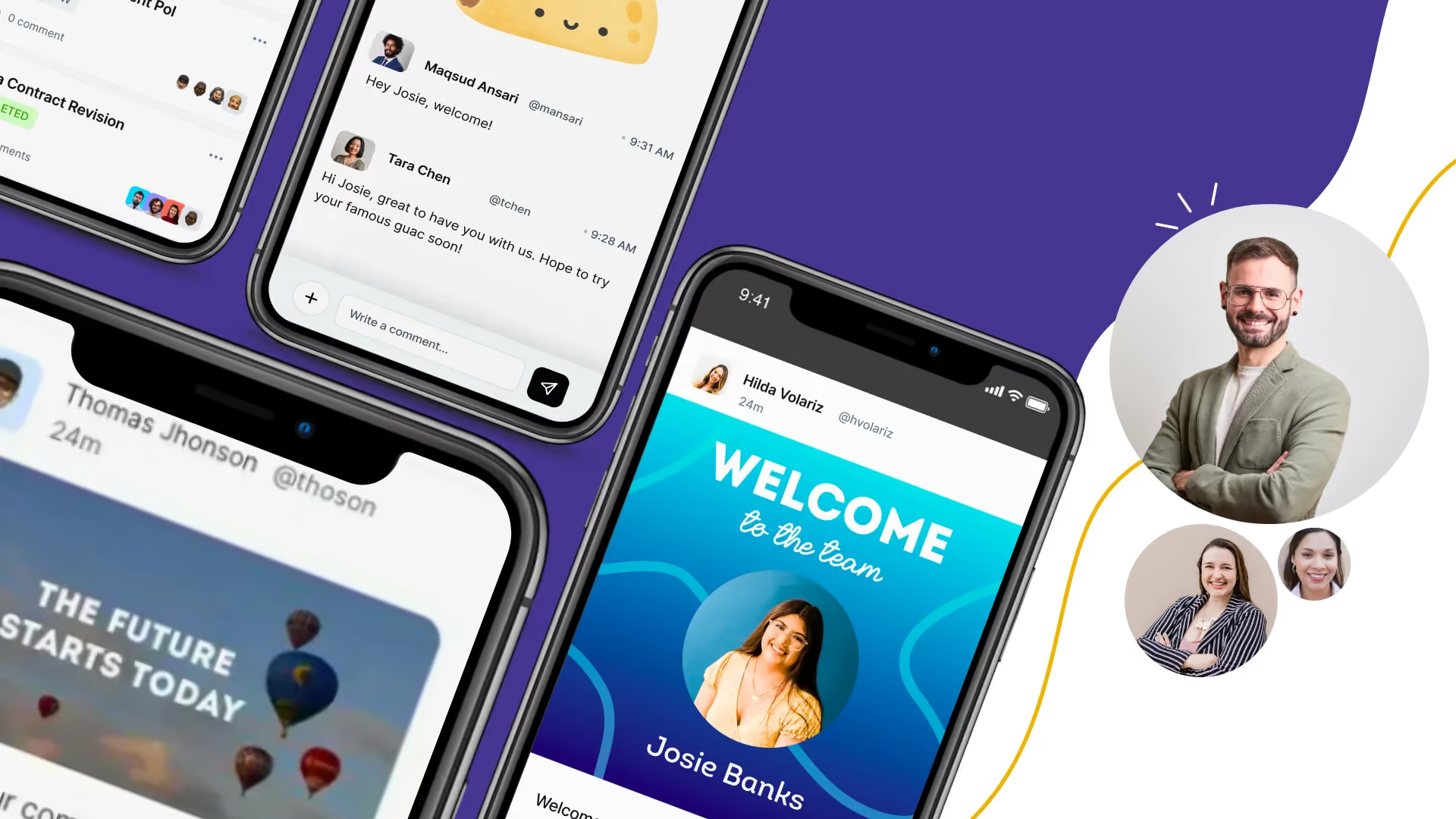
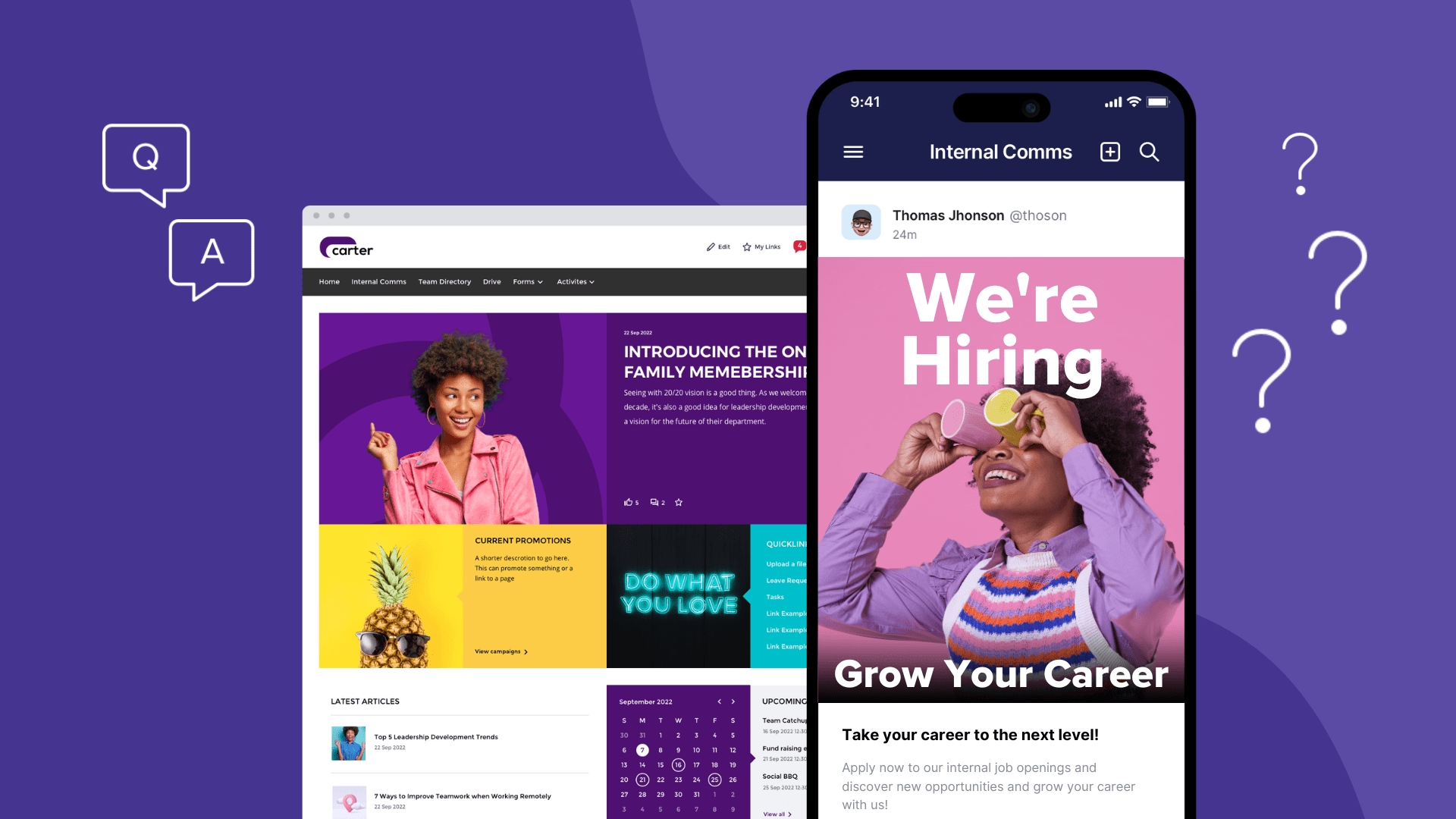
Our Work App brings team chat, company news, Praise, Wellbeing check-ins, and Polls into one mobile, desktop, and web app, with external users supported alongside your team. Try it free for 7 days. No credit card required.