Enhancing Healthcare Delivery - The Role of Intranet

The 21st century healthcare workplace leverages an eco-system of software and devices to provide a first-class patient management experience. Since modern healthcare is delivered by teams rather than individuals, a well-designed Intranet for healthcare teams in delivering and supporting the best possible outcomes for both patient and healthcare workers.
Impact of technology on Healthcare
Technology is so much a part of our daily lives that we often overlook its pervasiveness. As consumers, we use the Internet to research and purchase the goods and services that fill our homes.
As employees, we use an Intranet to share information and work more efficiently and productively with team members at our location and people working remotely. And as patients, we expect technology to empower and enable healthcare providers to assess, diagnose and treat us as quickly as possible to relieve our discomfort and even save our lives.
Yet, like any other workplace, the health care industry suffers from:
- Lack of workplace communication between healthcare teams, departments, physicians, doctors, and administrative and support staff.
- High staff turnover rates
- Low staff morale (overworked, understaffed, and stressful work environments)
- Lack of adequate training and development
- Performance issues – in this case, poor patient experiences undermined by lack of communication and stressed workforce planning
How Intranets improve the healthcare industry
Within the healthcare industry, the primary benefit of a well-defined and well-designed Intranet is the:
- Facilitation of effective workplace communication between departments that may also be geographically isolated from each other
- Better workflow of day to day processes, including policy management, as well as eliminating paper-based processes using online forms
- Document management allows healthcare organizations to comply with strict HIPAA standards while providing medical and administrative staff access to clinical documents and files. They can provide better care more accurately, expeditiously, and cost-effectively if they have centralized access to information.
- Delivery of a unified platform for access to operational content, directly affecting patient management and improving team communication, collaboration, and knowledge sharing
- Time & Cost reduction through movement towards a digital workplace
- Adaptable solutions to provide partner or patient data and messaging on demand. Including a HIPAA-compliant patient portal or a health partner portal that provides notifications, records, patient notifications, and partner information.
- Simplification of the provision of training courses, and
- Increased interaction between staff, and ultimately, the delivery of quality patient outcomes.
How Mobile Intranet Apps also improve healthcare industry
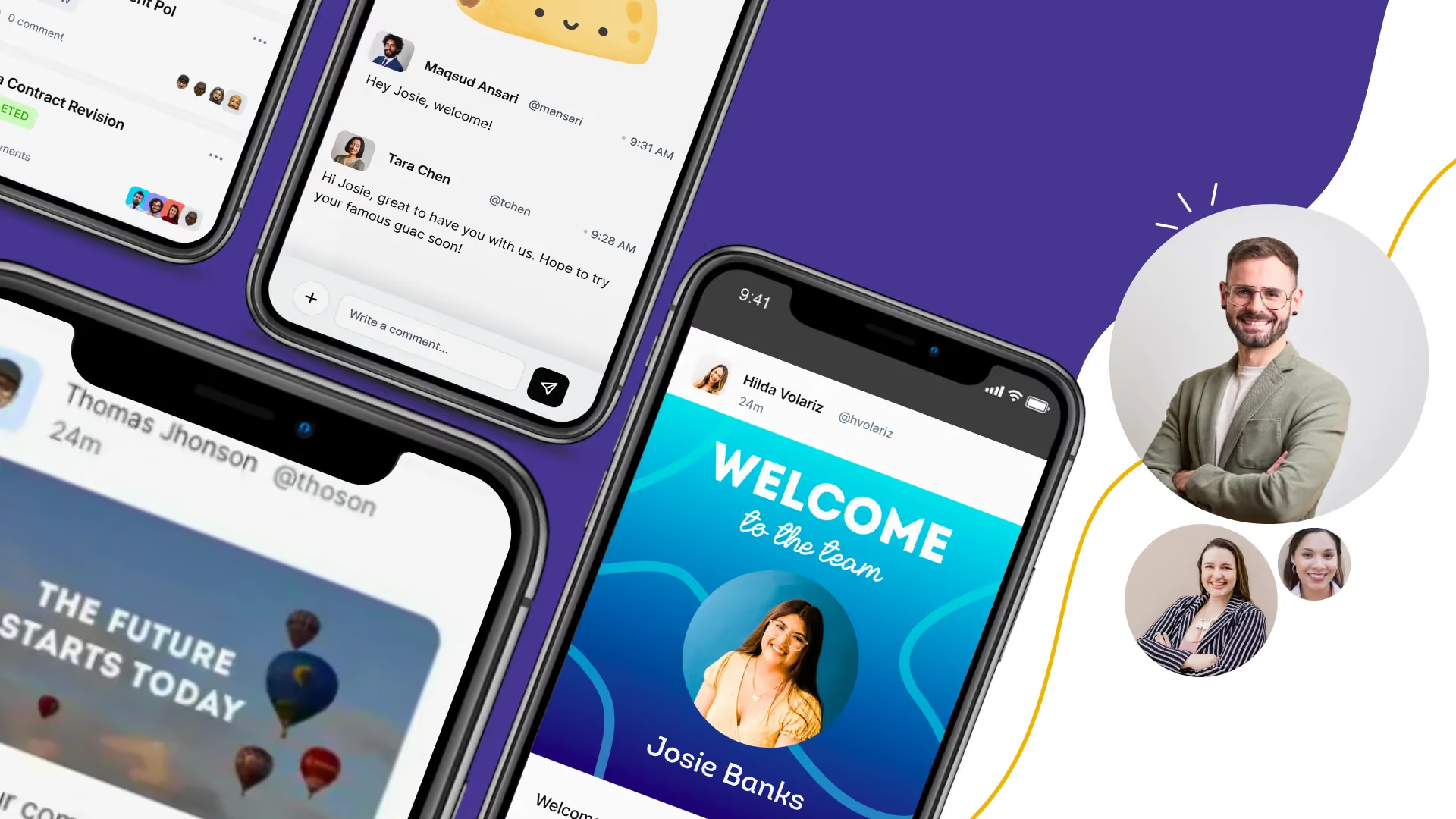
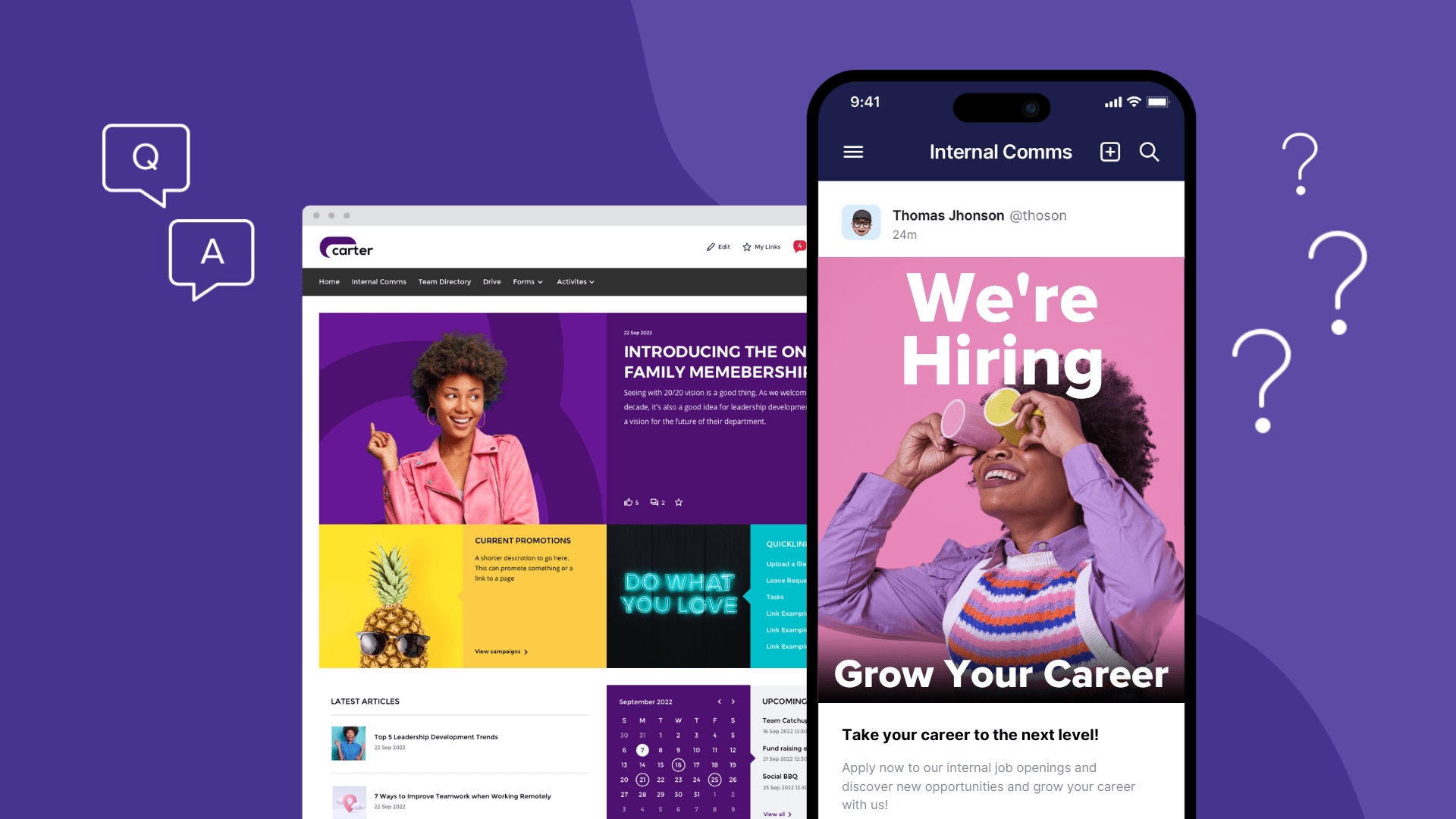
In addition to the numerous benefits offered by traditional intranets in the healthcare industry, the introduction of mobile intranet apps, also known as employee apps, bring an extra layer of convenience and efficiency. These dedicated apps, which can be downloaded onto smartphones, provide healthcare staff and administration teams with a range of features that further enhance their daily workflow and engagement.
An employee app, also known as an employee app, can be used by all teams in the healthcare industry. It can be downloaded onto their smartphones, providing a dedicated platform for various tasks.
Healthcare teams and administrative staff can use a secure Employee App to:
- - Check their work shifts
- - Participate in chat with team members securely
- - Engage in direct chats with colleagues
- - Manage their tasks
- - Use digital forms for data collection and submission
- - Receive news announcements, policy updates, or important reminders through notifications and alerts.
- Good-quality Intranet Apps often include:
- - Quick and anonymous mental wellness checks
- So you can evaluate team well-being and identify early warning signs of burnout or distress
These features contribute to:
- Teams feeling more valued, engaged, and heard.
- Positive impact on the healthcare organization's culture, morale, job satisfaction, and retention
Experience These Notable Improvements with an Intranet App for Your Healthcare Organization
1. Better communication between teams
Communication is critical for all workplaces. The lack of communication is the fundamental ingredient of failed projects and strategies across many organizations. It can mean the difference between continuity of wellness or something more devastating within the healthcare environment.
Inside a healthcare operation, including hospitals, medical centers, or aged care facilities, employees usually work in small teams of specialized experts who possess a wide variety of skill sets. Each department or group has a role to play in patient care, with the overarching goal being a successful, quality outcome.
Internal communication delivered by an Intranet facilitates the flow of information throughout all tiers of the organization. It leads to better service delivery and patient care — the adoption of electronic medical records and the digital hospital. Healthcare teams have instant access to a centralized source of patient information and documentation. An Intranet provides administrative and clinical healthcare delivery teams with the ability to access information, collaborate, and communicate with other groups so they can deliver improved patient care.
Video source: What is a Digital Hospital?
2. Reducing staff turnover and improving morale
It’s the fact that we live in an age of instant gratification. Once considered a stigma, “job-hopping” has become common amongst Generation Y/Z searching for job satisfaction. When staff feels frustrated by a lack of communication and support, both engagement and morale are affected.
In the healthcare setting, this can have disastrous repercussions for patients, where the institution also suffers. In any industry, employees who feel undervalued and isolated eventually begin to look elsewhere to achieve satisfaction. It also affects the morale of other employees who are left behind.
Employees are often separated from one another in specialized departments. As is common in most healthcare settings, communication becomes difficult, and a silo mentality can flourish.
The World Health Organization (WHO) has predicted that there are around 29 million nurses worldwide in 2013. An additional 9 million nurses and midwives will be needed by 2030. The healthcare industry is already dealing with nursing shortages, making the need for a collaborative and engaging internal communication model for Employee engagement an even greater necessity.
Further, a recent study identified that 80 percent of the U.S. workforce reported feeling stressed because of ineffective company communication, a 30 percent jump from just one year ago. Also, 63 percent say that they are ready to quit their jobs, and 70 percent feel overwhelmed because of broken communication methods and fragmented information.
Building a strong organizational culture is paramount to achieving a high level of staff engagement, which reduces current staff turnover and attracts motivated and talented recruits. Effective and consistent communication is also necessary if an organization hopes to attract and retain top performers. This reinforces staff engagement and collaboration across the broader organization, leading to increased team performance and role satisfaction.
3. Training and development
In any workplace, especially within the healthcare industry, there is a great need to keep abreast of changes in technology, operational procedures, and industry best practice.
Encouraging ongoing learning is a crucial method of engaging employees and increasing job satisfaction.
An Intranet-based training program is an ideal way to onboard new staff. It updates the skills and knowledge of existing staff members. For the modern knowledge worker, not all work is performed physically within the workplace. Employees work remotely using mobile technologies. Accessing training content and files within the corporate Intranet facilitates ongoing learning and upskilling of employees. It’s also highly cost-effective when compared with more traditional forms of corporate education.
Where this actually shows up
The point of any of this is not the intranet. It is what your people do with the time and clarity it gives back to them.
When a nurse finds the updated handover policy in ten seconds instead of ten minutes, that is time at the bedside. When a doctor can message a colleague across two campuses without picking up the phone, that is a faster decision. When an aged care worker logs a form on their phone at the end of a shift instead of doing paperwork after hours, that is one less reason to leave the job. When the new starter on Monday is onboarded through the same app the rest of the team already lives in, they feel like part of the team by Friday.
These are small wins. Stacked together across hundreds of staff and thousands of patient interactions, they are the difference between a healthcare organisation that runs and one that strains.
What to look for in a healthcare intranet
If you are reviewing your options, the questions worth asking are not about features. They are about fit. Will your clinical and non-clinical teams actually use it on a Tuesday at 2pm. Does it meet HIPAA and the security standards your board and your auditors will ask about. Can it handle policy updates, shift information, and team chat without forcing your people to flip between five different tools. Will it work as well on a phone in a corridor as it does on a desktop in admin.
CentricMinds Intranet and Work Chat for exactly this. Healthcare teams like Sonic HealthPlus, Regis Healthcare, Virtus Health, and Sun River Health use them to keep their people informed, connected, and supported, with HIPAA, SOC 2 Type II, and ISO 42001 compliance built in.
If that sounds like the kind of foundation your team needs, start with a 7-day free trial of the Work Chat, or book a demo of the Staff Intranet to see how it would work for your organisation.